
Development Status and Future Trend of Sulfur Industry in China

2023-12-14


   Sulfur is not only a basic chemical raw material, but also one of the security industries related to the development of agricultural production. It plays an irreplaceable role in the process of achieving the "double carbon" goal and promoting national food security, and its development is deeply affected by national policies and domestic and foreign market demand. Under the high pressure of achieving the "double carbon" goal and national food security, new sulfur standards have been continuously introduced, sulfur industry access and environmental protection standards have been continuously improved, and the quality of sulfur products has been continuously improved. it also promotes the transformation and development of the sulfur industry structure towards a green and low-carbon direction. Therefore, it is urgent to sort out the development status of China's sulfur industry to obtain the latest developments, so as to provide reference for the comprehensive development of China's sulfur industry.

1 China's sulfur industry chain

There are few natural sulfur deposits in my country, and they are basically unable to be mined due to technical reasons. As a result, my country's natural sulfur production has continued to decline since the 1990 s, while the recovered sulfur market has shown a continuous growth trend. As China's total mineral resources are relatively rich countries, in the proven energy reserves, coal accounted for as high as 94%, oil accounted for 5.4 of natural gas accounted for only 0.6, which shows that coal resources are rich, for the development of sulfur recovery market has played a huge role in promoting. At the same time, China is currently the world's largest sulfur consumption and importer, domestic sulfur mainly from oil refining, natural gas, coal chemical industry and other inorganic salt chemical industry, while the domestic sulfur consumption field is mainly concentrated in the downstream of the industry phosphate fertilizer and sulfuric acid industry. At present, China has established a relatively complete sulfur-related standards, standardized and guided the sulfur industry chain, and gradually expanded the demonstration project of high-sulfur natural gas purification capacity.

With the increasing process of oil and gas exploration and exploitation, as well as the continuous growth of the demand for sulfur downstream industry chain in China, the industry chain products are gradually enriched.See Figure 1 for details.
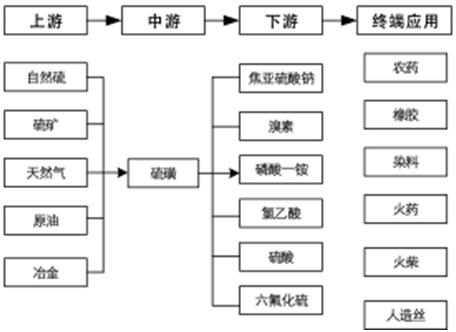
Figure 1 Schematic diagram of sulfur industry chain

    2 Current situation of domestic and foreign sulfur industry market

Affected by environmental monitoring and related planning, the overall consumption level of sulfur is restricted from 2013 to 2022, and the domestic demand for sulfur shows a downward trend, but the domestic production is increasing day by day, so the import volume is decreasing year by year, that is, the dependence of domestic sulfur is decreasing year by year. In 2022, supported by a significant improvement in global sulfur demand, China's sulfur consumption levels will also recover, as detailed in Table 1.

Table 1 Supply and Demand Balance of Domestic Sulfur Products


Year

Yield

Imports

export volume

2013

557

1055

0.17

2014

591

1024

0.16

2015

574

1193

0.02

2016

550

1196

0.43

2017

594

1124

0.29

2018

638

1078

0.07

2019

705

1173

0.10

2020

791

854

0.27

2021

849

853

0.15

2022

935

765

2.00


Domestic sulfur mainly comes from crude oil processing desulfurization, natural gas purification desulfurization and coal chemical industry, while sulfur from crude oil processing and natural gas purification accounts for 94% of the total production capacity, of which the sulfur production capacity of natural gas purification plants accounts for 25% of the total domestic production capacity. The distribution of proven natural gas resources in China is mainly concentrated in the western region, especially in the northeast of Sichuan, such as the northeast Sichuan gas field and the Puguang gas field. In terms of regional division, domestic sulfur production is mainly distributed in southwest, east and south China. Among them, the southwest region is the region with the largest sulfur production capacity in China, accounting for 27.5 per cent of the country's total production and 37.4 per cent of the country's total production. The sulfur in Southwest China mainly comes from Sinopec Puguang Gas Field, Yuanba Gas Field and PetroChina Southwest Oil and Gas Field Company.

From the perspective of market supply, domestic sulfur production capacity has increased steadily from 11.655 million t/a to 15.215 million t/a from 2017 to 2021, with an average annual growth rate of about 7.1. Imports, on the other hand, fell from 11.2357 million t/a to 8.5347 million t/a, with a 8.8 per cent increase in 2019 due to the sulphur market, but overall, imports fell by about 5.7 per cent.
Under the influence of the "double carbon" goal and the rapid development of new energy, the growth of global energy demand will be restrained to varying degrees, indirectly affecting the supply of sulfur. According to the IEA (International Energy Agency) statistics and forecast analysis, the global sulfur production is expected to reach 70 million t by 2023. Among them, the Middle East is still the region with the fastest growth rate, and the output is expected to reach more than 20 million t. In contrast, sulfur production in North America will continue to decline relative to the Middle East, with annual production expected to reach 12 million t. Global natural gas production and refinery crude oil processing are expected to grow by only 1.63 per cent and 1.90 per cent by 2025. Affected by the conflict between Russia and Ukraine, the consumption of natural gas in Europe is limited, which leads to the continued high global crude oil prices, which in turn suppresses the start of refinery construction, and the short-term decline in sulfur supply. At the same time, due to the dual impact of the new crown epidemic and the conflict between Russia and Ukraine, crop prices continue to rise, thus increasing the global food security problem. In this context, global fertilizer demand is expected to continue to increase. According to IFA (International Fertilizer Association), global demand for phosphate fertilizers will grow by 1.8 per cent by 2025. In addition, the stimulation of the global "double carbon" target plan will continue to promote the demand for battery metals such as new energy batteries, thus promoting the growth of demand in the sulfuric acid market. The China Sulfuric Acid Industry Association predicts that by 2025, the demand for sulfuric acid in the chemical industry will continue to grow at an average annual rate of 2.9 percent, leading to a gradual expansion of the gap between supply and demand.
According to the statistics of China Sulfuric Acid Industry Association, China's total sulfur consumption in 2022 is about 16.55 million t, a decrease of 10.35 year-on-year, mainly phosphate fertilizer, commodity sulfuric acid, caprolactam and titanium dioxide. The consumption of phosphate fertilizer is the largest, accounting for more than 50% of the total sulfur, as shown in Table 2. In recent years, with the commissioning of a large number of sulfur and sulfuric acid production units and the development of high sulfur gas fields, such as the capacity improvement project of 15 natural gas purification plants in PetroChina Southwest Oil and Gas Field, and the development and operation of high sulfur gas fields in Longwangmiao, Gaoshi Tie and Northeast Sichuan, China's sulfur production will reach 9.35 million t in 2022, up 11.30 from the same period in 2021. The production will continue to reach a new high, accounting for 6.56 million t by 2022, accounting for 69%; petroChina's production capacity reached 1.44 million t/a, accounting for 15%. At present, the output of the domestic sulfur industry has maintained steady growth, and the dependence on foreign imports has continued to decrease. With the continuous growth of demand in downstream fertilizer and other fields, as well as the commissioning of sulfur production units, future production and demand will continue to grow.

Table 2 Proportion of sulfur consumption in China in 2022

Classification

Proportion/%

phosphate fertilizer

55.07

Sulfuric acid

19.49

Caprolactam

7.33

titanium dioxide

7.91

Other

10.20


3 Sulfur industry related policies and standards and regulations

The sulfur industry is an industry driven by environmental pollution and emissions, and Europe and the United States have strict laws, regulations and industry standards for the emission of industrial sulfur oxides. At present, the most representative is the "Clean Air Act" passed by the United States in 1970, which has been revised many times since then to protect air quality and limit the emission of air pollutants, including sulfur. Under the Act, the EPA (U.S. Environmental Protection Agency) set sulfur emission standards that require industries and power plants to reduce sulfur oxide emissions. The EU passed the "Industrial Emissions Directive" in 2010 and has been revised several times since then. The directive regulates industrial emissions in the EU, including sulfur oxide emissions. The directive stipulates BAT (best available technology) and emission limits, and requires industrial facilities to take measures to reduce sulfur oxide emissions. Japan passed the Air Pollution Prevention Act in 1968. Saudi Arabia's initial standards were the Saudi Environmental Standards issued in 2004, and these standards cover multiple industries, including sulfur-related fields such as petroleum and chemicals. The UAE passed the UAE Environmental Law in 1999, which provides a legal framework for environmental protection, including emission limits for atmospheric pollutants. The law requires companies to reduce emissions of pollutants such as sulfur oxides and establish monitoring and control systems to ensure compliance. Kuwait passed the Kuwait Environmental Protection Law in 2014, including controlling the emission of air pollutants. The law aims to protect the environment and public health, requires companies to take measures to reduce emissions of pollutants such as sulfur oxides, and establish monitoring and reporting mechanisms. In 2002, the Russian Federation adopted the Law on Environmental Protection of the Russian Federation, which provides the legal framework for environmental protection in the Russian Federation. According to this law, sulfur is classified as one of the atmospheric pollutants, requiring enterprises and industrial facilities to control and reduce the emission of sulfur oxides in the production process. Among them, Moscow issued the "Moscow City Air Quality Improvement Plan" in 2010. The city of Moscow has formulated a series of plans and measures to improve air quality, including controlling the emission of air pollutants, such as sulfur oxides. The plan calls for industrial companies, power plants and transportation sectors to take measures to reduce emissions and promote the use of clean energy. In 2004, South Korea passed the Atmospheric Environmental Protection Law and the Air Pollutant Emission Standards for South Korea Industrial Facilities. According to the law, sulfur oxides are regarded as one of the important air pollutants, and companies are required to reduce sulfur oxide emissions. And establish a monitoring and reporting mechanism. The emission standards stipulate the emission limits and control requirements of sulfur oxides in different industries to ensure that the emissions of enterprises and industrial facilities meet environmental protection requirements.
Since 2002, the relevant departments of the Chinese government have formulated and implemented the the People's Republic of China Safety Production Law, the 13th Five-Year Plan for Safety Production, and the Comprehensive Management Plan for Hazardous Chemical Safety. In addition, in the field of environmental protection, the Air Pollution Prevention and Control Action Plan was promulgated in 2013. In 2015, the Water Pollution Prevention and Control Action Plan was promulgated. In 2016, the Soil Pollution Prevention and Control Action Plan was promulgated. In 2018, the "Opinions on Comprehensively Strengthening Ecological Environmental Protection and Resolutely Fighting Pollution Prevention and Control" and the "Three-year Action Plan for Winning the Blue Sky Defense War" were promulgated; in August 2019, the Ministry of Ecology and Environment issued the "Three Phosphorus" Special Investigation and Remediation Action Implementation Plan "; in 2020, the General Office of the CPC Central Committee and the General Office of the State Council issued the" Guiding Opinions on Building a Modern Environmental Governance System ". The 2021 national standard "GB/T 2449.1-2021 industrial sulfur part 1: solid products", the 2015 national standard "GB/T 2449.2-2015 industrial sulfur part 2: liquid products" and other 19 standards.
With the continuous enhancement of national economic development and environmental protection awareness, as well as the formulation and implementation of safety and environmental protection policies, coupled with the promotion of the "double carbon" goal, the relevant regulations, standards and other indicators of the sulfur industry will become more stringent, which will directly affect the survival and development of the sulfur downstream industry chain, and have an important impact on the domestic sulfur market demand. The government's policy tilt will be further enhanced, thus strongly promoting the development of the sulfur industry market in the direction of low-carbon sustainable development.

4 Future Development Trend of Sulfur Industry in China

In recent years, in order to meet the demand of the downstream market of sulfur industry, sulfur production equipment and application technology have been developed rapidly, many new downstream new technology products have been applied in more and more fields, and the market demand continues to rise. At present, the application of sulfur industry in industry and agriculture has an irreplaceable position, and its use continues to grow, which plays an irreplaceable role in promoting the realization of "double carbon" goal, ecological environment protection, low-carbon energy development and national food security.
(1) Increased awareness of environmental protection: With the increasing prominence of environmental problems, including air quality and air pollution, the supervision and restriction of sulfur emissions will be further strengthened. Our government has taken a series of measures to reduce sulfur emissions and encourage the use of clean energy. In the future, the enhancement of environmental protection awareness will further promote the development of the sulfur industry towards a more environmentally friendly and sustainable direction.
(2) Technological innovation and improving efficiency: In order to reduce sulfur emissions, the company will devote itself to technological innovation and improving production efficiency. This may include improved processes such as oil refining and coal combustion, and the use of advanced purification equipment and technologies to reduce the production of sulfur oxides. At the same time, as technology advances, more environmentally friendly methods of sulfur production and utilization may emerge.
(3) Energy structure transformation: China is committed to the transformation of energy structure, reduce the dependence on high sulfur coal. With the promotion of clean energy and the development and utilization of renewable energy, the proportion of coal may decline, thereby reducing the production of sulfur. This may have a certain impact on the scale and structure of the sulfur industry.
(4) International market demand: As an important chemical raw material, sulfur is widely used in pesticides, rubber, oil refining and other industries. The demand for sulfur in the international market will have an impact on the development of China's sulfur industry. The growth or change of demand may bring opportunities and challenges, which require enterprises to respond flexibly.
(5) Cross-industry cooperation: The sustainable development of the sulfur industry requires the cooperation and coordination of all walks of life. Collaboration between business, government and research institutions will foster technological innovation, share resources and experience, and drive the sulphur industry towards a more sustainable and environmentally friendly development.
(6) Environmental pressure and emission reduction requirements: With the increase of global environmental awareness, the Chinese government may increase the supervision and emission reduction requirements for sulfur emissions. Companies will be encouraged to adopt cleaner production technologies and processes to reduce sulfur oxide emissions.


REAL-TIME NEWS

Yangzhou Jiaming Environmental Protection Technology Co., Ltd.

Address: Fangxiang Industrial Park, Hanjiang District, Yangzhou City, Jiangsu Province

Contact: Tang Jiafu13951439212

Contact: Wu Weimin13952058396

Two-dimensional code

Scan QR Code


Copyright:Yangzhou Jiaming Environmental Protection Technology Co., Ltd.